
What a maintenance plan is
A maintenance plan replaces one-off calls with a schedule. Each area of the facility gets a defined scope and a frequency, the crew works the same route every visit, and a checklist is completed and kept. It is the service most Ashburn operators ask about first, because it is the one that keeps a hall in the condition it was handed over in.
Setting the frequency
There is no universal interval. The right frequency depends on how much traffic an area gets, whether there is construction nearby, how the cooling system moves air, and what your own operating standards or client contracts require. A typical plan separates:
- White space (the hall floor itself): floors and cabinet exteriors on a regular cycle, with perforated tiles and the plenum on a longer one.
- Grey space (electrical, mechanical and support rooms): floors, ledges and equipment exteriors on a cycle driven by how often people are in them.
- Entry and staging areas: more often, because that is where outside dust comes in on wheels and boots.
- High-level surfaces, such as overhead cable trays, on a longer cycle with access equipment booked in advance.
We propose a starting cadence from a walkthrough, then adjust it after the first few visits based on what the checklists show. The guide on how often a data center should be cleaned explains the factors behind each interval.
What each visit includes
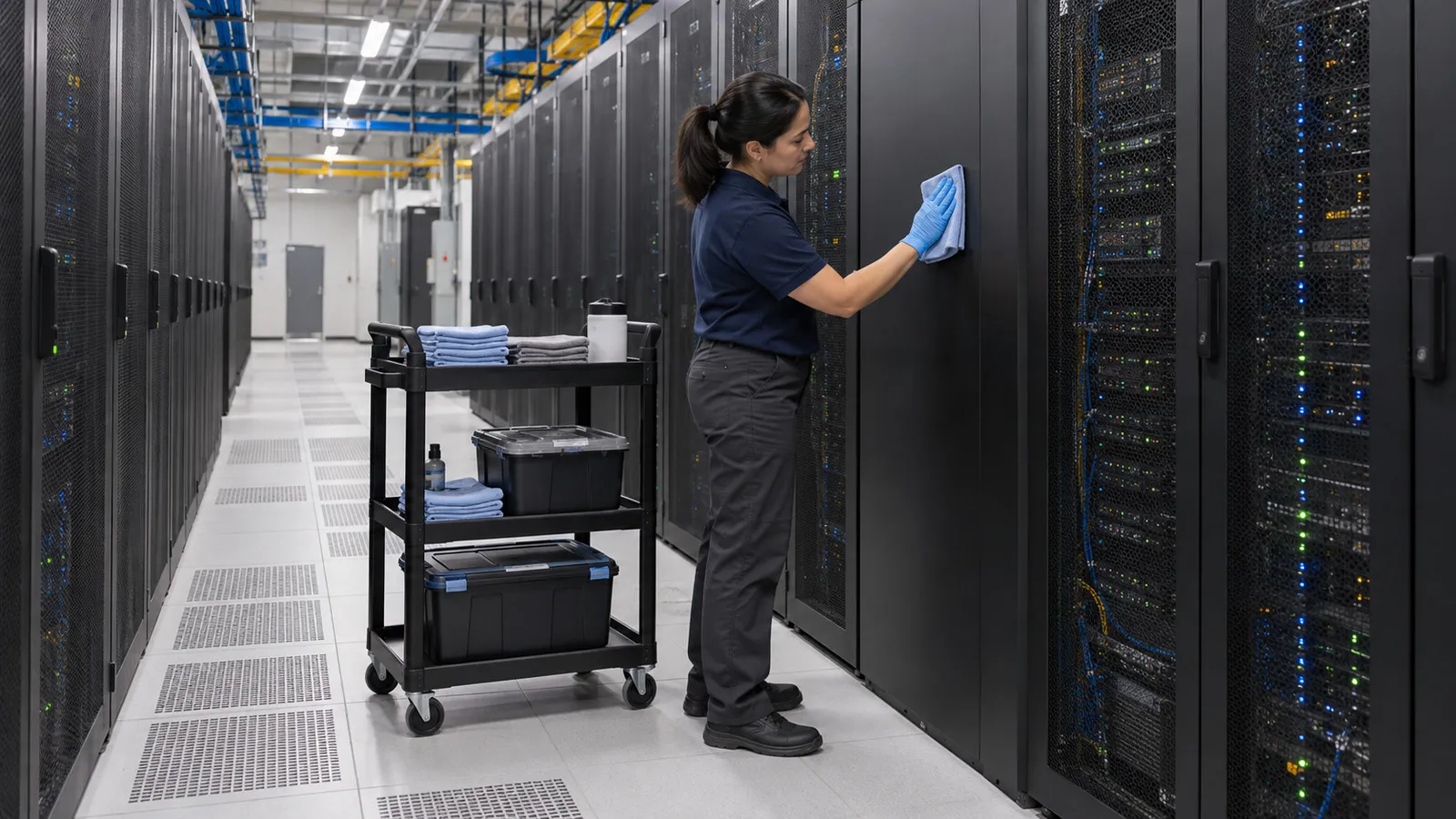
The scope is written per area. Typically: HEPA vacuuming of floors, low-lint wiping of cabinet and PDU exteriors, ledges, door hardware and glazing, removal of any debris, and a visual check for anything that needs reporting (dust build-up at tile perforations, marks on floors, blocked grilles). Nothing inside equipment is touched.
Exclusions
Plans do not include plenum cleaning, one-off deep cleaning after an incident, or construction-phase work; those are quoted as separate lines so the recurring cost stays predictable.
Access, products and records
Crews are badged and escorted according to your process, work within agreed hours, and use products and equipment approved by the site. Every visit produces a completed checklist, and the plan can include a periodic walkthrough with your facilities lead to review it.
Request a maintenance proposal with the areas you want covered and roughly how large they are. We can also walk the facility with you and build the area list from that.
Scope at a glance
- Frequency set per area from use, traffic and airflow, not a fixed interval
- Written scope and checklist for every visit
- Equipment exteriors, floors, ledges, glazing and door hardware
- Plenum, deep cleaning and construction work quoted separately
Component services
Overhead Cable Tray Cleaning
Dust removal from the exterior of overhead cable trays, ladder rack, busway housings and other high-level surfaces in data halls and corridors, using access equipment agreed with the facility.
See how every engagement runs, from scoping call to completed checklist
Questions facilities teams ask
How often should a data hall be cleaned?
It depends on traffic, nearby construction, how the cooling moves air and what your standards require. Entry and staging areas usually need attention most often; the plenum least often. We propose a starting cadence per area and adjust it from the visit records.
Do we get a record of each visit?
Yes. Each visit closes with a completed checklist for the areas covered, which you keep for your own audits or client reporting.
Can the plan start with just one hall?
Yes. Many plans begin with a single hall or a support corridor and expand once the routine is working.